Key Features:
Wide Frequency Range:
Coverage: The 100-400 MHz range spans VHF frequencies, making it suitable for various communication and broadcasting applications.
Bandwidth: Offers effective operation across the entire frequency range, providing versatility for different uses.
Directional Pattern:
Directional Radiation: Provides a focused beam in one direction, improving signal reception and transmission in that direction while minimizing interference from other directions.
Impedance Matching:
Design: Typically designed to match a 50-ohm impedance, which is standard for most RF equipment. Some variations might be designed for 75-ohm systems.
Broadband Performance:
Consistent Performance: Maintains good performance characteristics, including gain and directivity, across the entire frequency range.
Design Specifications:
Frequency Range: 100-400 MHz
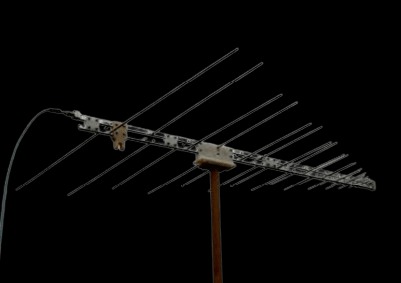
Element Lengths: Elements are sized according to the frequency they are designed for. For the lower end of the range, elements are longer, and they become shorter for higher frequencies.
Element Spacing: The spacing between elements is designed to increase logarithmically, ensuring the antenna’s performance remains consistent across the frequency range.
Element Configuration:
Driven Element: Where the feedline connects. Its length and placement are crucial for efficient operation.
Reflectors and Directors: Elements are arranged to optimize gain and directivity. The number of directors typically affects the gain.
Materials:
Elements: Usually made from lightweight, corrosion-resistant materials such as aluminum or stainless steel.
Boom: The boom is typically constructed from strong, lightweight materials like aluminum or fiberglass.
Feed Point:
Impedance Matching: Designed to match the feedline impedance, typically 50 ohms, to ensure efficient signal transfer and minimize SWR (Standing Wave Ratio).
Construction and Installation:
Assembly:
Elements and Boom: Assemble the elements onto the boom according to the design specifications. Ensure that all elements are aligned and securely attached.
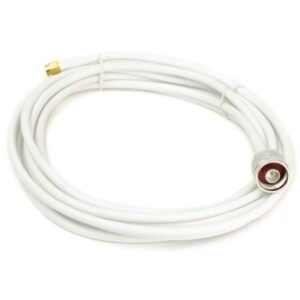
Feed Line: Connect the feed line to the driven element using high-quality coaxial cable to minimize signal loss.
Mounting:
Pole or Mast Mount: Secure the antenna to a mast or pole. Proper mounting is crucial for maintaining alignment and stability.
Height and Location: Install the antenna as high as possible and away from obstructions to maximize performance.
Tuning and Testing:
SWR Measurement: Measure the SWR across the frequency range to ensure it is within acceptable limits. Adjust the antenna or matching network as needed.
Performance Testing: Test the antenna’s performance to verify that it operates effectively across the desired frequency range.
Applications:
Telecommunications: Suitable for use in VHF communication systems, including certain emergency services and commercial communication systems.
Broadcasting: Useful for receiving and transmitting radio and TV signals within the VHF range.
Amateur Radio: Ideal for amateur radio operators needing a versatile antenna for various VHF bands.
Signal Monitoring: Effective for monitoring a wide range of VHF frequencies, including those used by public services and other communication systems.
Maintenance:
Regular Inspection: Periodically check the antenna for signs of wear, damage, or corrosion, particularly if it is installed outdoors.
Cleaning: Clean the elements and feed point to maintain optimal performance and extend the lifespan of the antenna.

Reviews
There are no reviews yet.