View cart “LMR 300 Low Loss RF Coaxial Cable – N Male to SMA Male Connector – For Router – 30 Meter” has been added to your cart.
Sale!
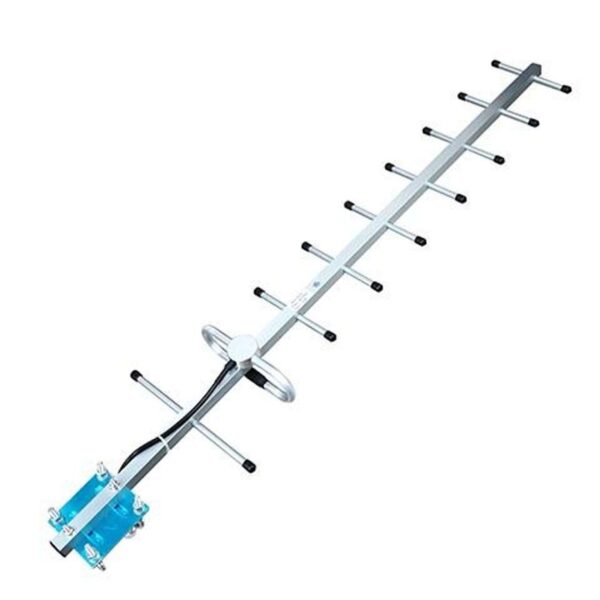
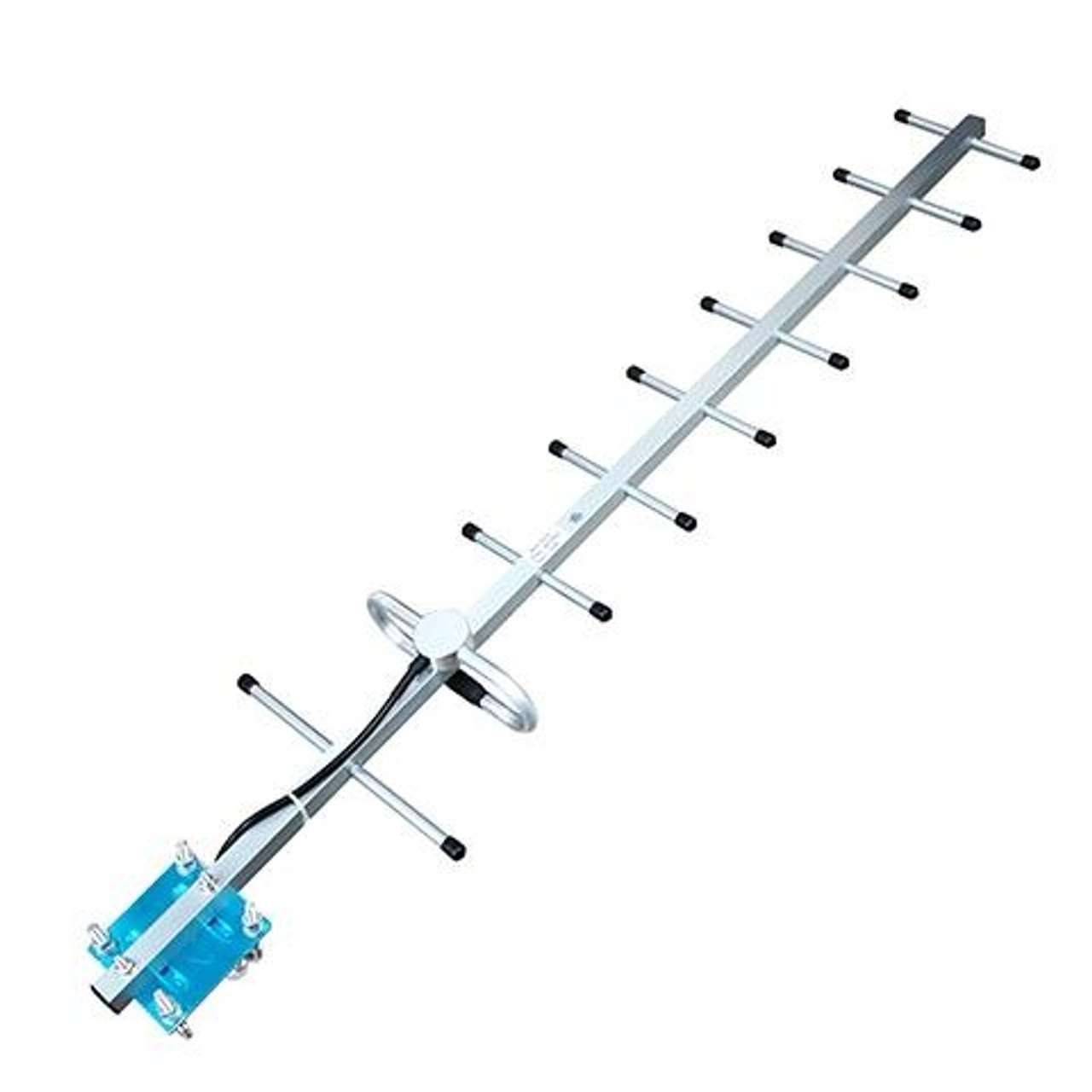
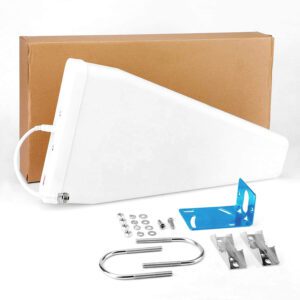
12dBi Yagi Antenna 800-2500MHz
₹1999₹1649
Design Concept:
Yagi-Uda Antenna: This antenna consists of multiple elements arranged along a boom. It includes: Driven Element: This is the element connected to the feedline, where the signal is transmitted or received. Reflector: Positioned behind the driven element, it reflects signals towards the driven element to enhance gain. Directors: Placed in front of the driven element, they focus the signal and increase gain by directing energy in a specific direction. Key Features: Gain:
12 dBi Gain: Provides significant amplification of the signal in the desired direction, improving both reception and transmission range compared to lower-gain antennas. Frequency Range:
800-2500 MHz: Covers a broad spectrum, including frequencies used in various cellular, LTE, and some satellite communications applications. Directional Pattern:
High Directionality: Focuses energy in a specific direction, enhancing signal strength and reducing interference from other directions. Construction:
Durability: Typically constructed with high-quality materials to withstand environmental conditions and provide reliable performance. Design Specifications: Frequency Range: 800-2500 MHz
Element Lengths: Elements need to be sized according to the specific frequencies within this range. The length of the elements decreases with increasing frequency. Element Spacing: The spacing between elements is crucial for performance and varies with frequency and design. Proper spacing ensures optimal gain and directionality. Element Configuration:
Driven Element: Designed to match the impedance of the feedline, usually 50 ohms. Reflector and Directors: Number and spacing are optimized to achieve the desired gain and directivity. More directors typically result in higher gain. Materials:
Elements: Usually made from aluminum or other lightweight, corrosion-resistant materials. Boom: The boom supporting the elements is often made from aluminum or fiberglass for strength and durability. Feed Point:
Impedance Matching: The feed point is designed to ensure a 50-ohm impedance match with the transmission line, minimizing signal loss and SWR (Standing Wave Ratio). Construction and Installation: Assembly:
Elements and Boom: Assemble the elements onto the boom according to the design specifications. Ensure precise alignment and secure attachment. Feed Line: Connect the feed line to the driven element, using quality coaxial cable to minimize signal loss. Mounting:
Pole or Mast Mount: Securely attach the antenna to a mast or pole. Proper mounting is crucial for maintaining alignment and stability. Height: Mount the antenna as high as possible and away from obstructions to enhance performance. Tuning and Testing:
SWR Measurement: Check the SWR across the frequency range to ensure it is within acceptable limits. Adjust the antenna or matching network as needed. Performance Testing: Verify the antenna’s performance in terms of gain, directionality, and signal clarity. Applications: Cellular Communication: Suitable for improving signal strength in cellular networks, including GSM, LTE, and 5G. Broadcasting: Effective for receiving or transmitting broadcast signals, where high gain and directionality are required. Amateur Radio: Useful for amateur radio operators needing high gain for long-distance communication on various frequencies. Satellite Communication: Can be used for receiving signals from satellites, depending on the specific frequency range and design. Maintenance: Regular Inspection: Periodically check the antenna for damage, wear, or corrosion, especially if installed outdoors. Cleaning: Clean the elements and feed point to maintain performance and extend the antenna’s lifespan.
| 12dBi Yagi Antenna 800-2500MHz | Designed for frequencies between 800-2500MHz, this Yagi antenna provides a gain of 12dBi. It has a vertical polarization with an impedance of 50Ω and a VSWR of ≤ 1.5. The antenna comes with an RG-58 cable and an N Female connector. ROHS compliant, it is suitable for general applications requiring moderate gain and stable performance. |
Weight
0.1 kg
Reviews
There are no reviews yet.
Be the first to review “12dBi Yagi Antenna 800-2500MHz” Cancel reply


Reviews
There are no reviews yet.