View cart “N Male Connector for LMR 300 Coaxial Cable – Crimping Connector (Pack Of 4)” has been added to your cart.
Sale!
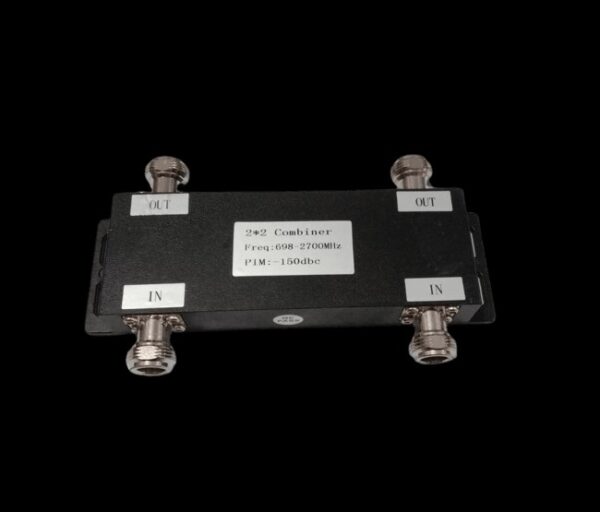
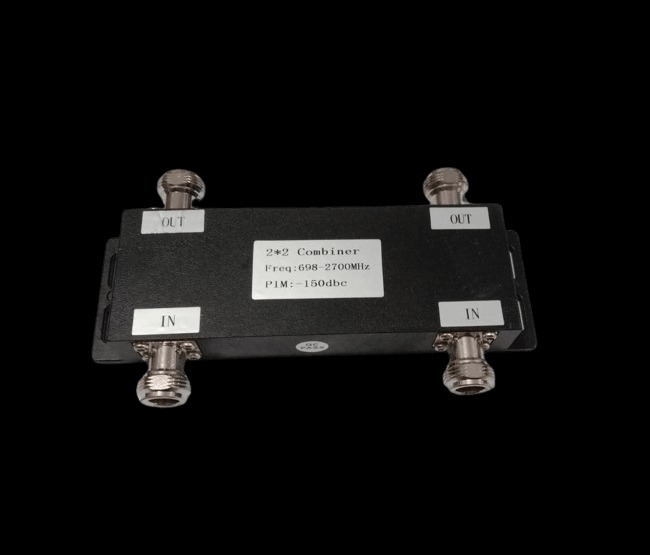
2 TO 2 COMBINER 698~2700 MHZ
₹1999₹1520
Frequency Range: 698 MHz to 2700 MHz
This range encompasses many communication bands, including those used for cellular, Wi-Fi, and other RF cmunications.
Configuration: 2-to-2
The combiner features two input ports and two output ports. It can combine two input signals into two separate output signals or split a signal into two paths, depending on the configuration and application. Insertion Loss: Typically 0.5 dB to 1.5 dB
Insertion loss refers to the amount of signal power lost due to the insertion of the combiner into the signal path. Lower insertion loss values are preferable as they indicate minimal signal attenuation. Isolation: Typically 15 dB to 20 dB
Isolation measures how well the combiner separates the signals between different ports. Higher isolation values indicate better separation and less signal leakage between input and output ports. Return Loss: Typically 15 dB to 20 dB
Return loss measures how well the combiner matches the impedance of the transmission lines. Higher return loss values suggest better impedance matching and reduced signal reflection. Power Handling: Typically 10 W to 50 W or higher
This specifies the maximum power the combiner can handle without sustaining damage. The exact rating will depend on the design and construction materials of the combiner. Connector Type: Various options
The combiner can be equipped with different types of connectors, such as N-type, SMA, or other RF connectors, depending on the model and manufacturer. Construction: Typically made from high-grade materials such as aluminum or brass with high-quality dielectric materials
The choice of materials impacts the combiner’s performance, durability, and frequency response. Dimensions: Varies by model
The size and form factor will depend on the specific design and manufacturer of the combiner. Ensure it fits within the physical constraints of your system. Environmental Conditions:
Temperature Range: Typically from -40°C to +85°C Humidity: Generally up to 95% non-condensing Key Considerations: Signal Combining/Splitting: Ensure that the combiner meets your specific needs for combining or splitting signals. The performance metrics such as insertion loss, isolation, and return loss are critical to maintaining signal integrity.
Performance: Look for low insertion loss and high isolation to ensure minimal signal disruption and accurate distribution of signals.
Application Suitability: This combiner is versatile and can be used in various RF applications including network distribution, signal routing, and communication systems where balanced signal distribution is required.
| A 2-to-2 combiner operating within the 698-2700 MHz frequency range. It efficiently combines or distributes RF signals, ensuring minimal loss and optimal signal quality. This combiner is ideal for use in telecommunication systems, supporting reliable signal management across various applications. |
Weight
0.1 kg
Reviews
There are no reviews yet.
Be the first to review “2 TO 2 COMBINER 698~2700 MHZ” Cancel reply


Reviews
There are no reviews yet.