
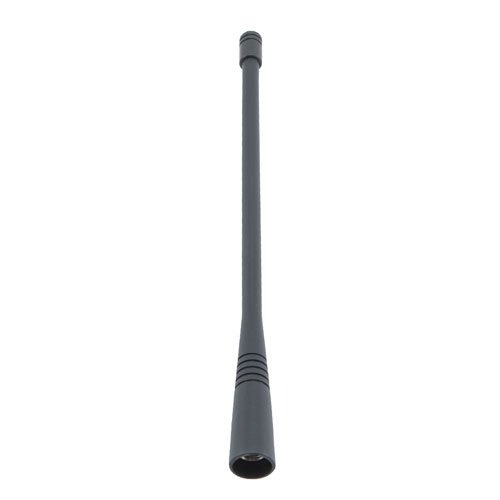
A Rubber Duck Antenna is a compact, flexible, omnidirectional radio antenna widely used on handheld radios, portable transceivers, scanners, RF modules, and similar wireless communication equipment. It is especially useful for applications in the 328 MHz to 367 MHz frequency band, which is common for certain land-mobile radios, industrial devices, and some public safety / commercial communication systems.
🔧 Physical and Structural Overview
-
Helical Monopole Design:
Inside the rubber or plastic housing is a metal wire formed into a tight helix (spring-like coil). This coil acts as the radiating element of the antenna. -
Protective Coating:
The metal helix is sealed within a rubber/plastic outer layer. This gives the antenna a “rubber ducky” look — flexible, rugged, and resistant to physical damage. -
Connector:
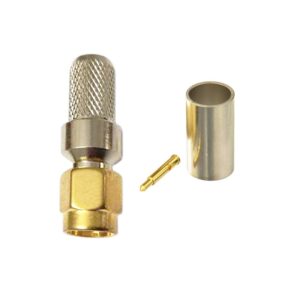
Most rubber duck antennas use standard RF connectors (e.g., SMA, BNC, UHF) for easy attachment to radios or RF devices. (Connector type depends on the specific model.)
Reviews
There are no reviews yet.