
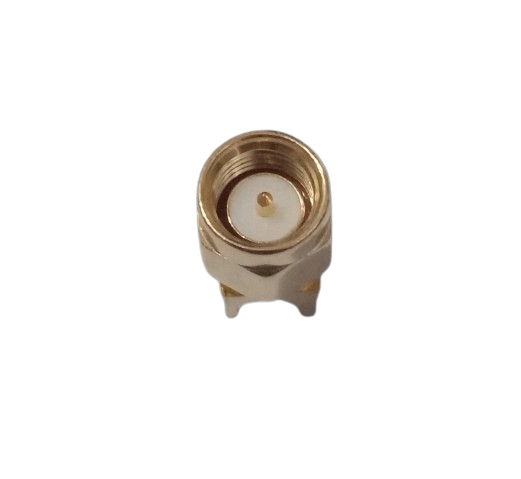
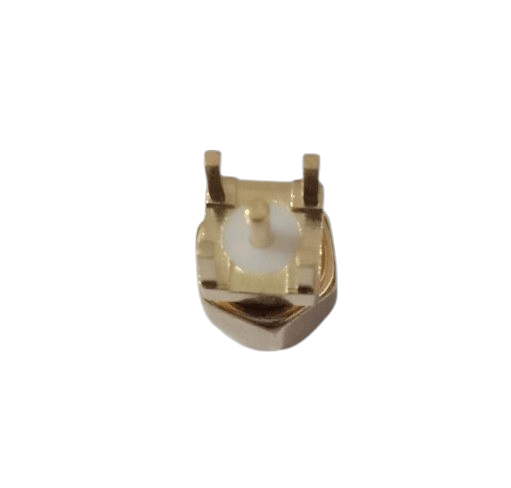
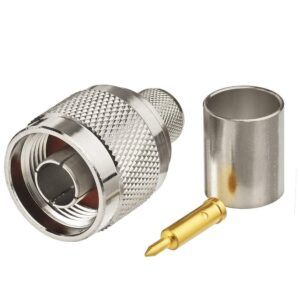
This SMA male connector is designed for soldering onto a printed circuit board. It provides a secure frequency signals, ideal for RF applications requiring PCB integration.
The term ”SMA M PCB SOLDER” refers to an assembly involving an SMA connector, specifically a male type, designed to be soldered onto a printed circuit board (PCB). Here’s a detailed breakdown of each component and the soldering process:
Components:
1. SMA Connector (Male):
– SMA (Sub Miniature version A): A coaxial RF connector used for high-frequency applications, typically up to 18 GHz. It’s known for its compact size and reliable performance.
– Male (M): The male SMA connector has a central pin that makes contact with the central conductor of a female SMA connector. In this context, the connector is designed to be mounted directly onto a PCB.
– PCB Mount: The connector is equipped with pins or leads that are meant to be soldered into the PCB. These are designed to fit into the PCB’s pads or holes.
2. PCB (Printed Circuit Board):
– PCB: A board used to mechanically support and electrically connect electronic components. It has copper traces or pads that connect the components in the circuit.
3. Soldering:
– Soldering: A process used to create electrical connections by melting solder to join metal parts. In this case, it involves attaching the SMA connector’s pins or leads to the PCB.
This assembly is prevalent in various applications including telecommunications, networking equipment, and other RF systems where precision and durability are crucial. The SMA connector’s compatibility with high-frequency signals makes it ideal for these types of systems, and mounting it directly onto the PCB ensures a secure and reliable connection.
Reviews
There are no reviews yet.